
The Great Brexit Betrayal
Four years after Britain formally left the European Union, a curious thing is happening in Whitehall. Civil servants are quietly updating UK regulations to mirror new EU directives. Ministers are signing off on 'technical adjustments' that happen to align with Brussels' latest requirements. And parliamentary committees are recommending policy changes that would be familiar to anyone following European Commission working groups.
This isn't coincidence — it's managed convergence. Through a web of treaty obligations, regulatory pressures, and bureaucratic inertia, Britain is being pulled back into the EU's regulatory orbit without a single vote in Parliament or mention in a manifesto. The Trade and Cooperation Agreement (TCA) that Boris Johnson hailed as 'getting Brexit done' is quietly undoing what 17.4 million people voted for.
The TCA's Trojan Horse
The devil, as always, is in the detail. Buried within the TCA's 1,246 pages are dozens of 'level playing field' provisions that require Britain to maintain 'common high standards' in areas ranging from workers' rights to environmental protection. These aren't just aspirational commitments — they're legally binding obligations with real enforcement mechanisms.
Article 9.4 of the TCA states that both parties must 'ensure' that their labour and social standards don't fall below the levels provided for in their respective laws at the end of 2020. But here's the catch: EU law continues to evolve, and the agreement contains mechanisms for 'rebalancing' trade relations if divergence becomes too great. In practice, this means Britain can't roll back regulations without risking tariffs or other retaliatory measures.
Regulatory Capture in Action
The results are already visible across government departments. The Department for Business has introduced new corporate governance rules that mirror EU proposals on board diversity. DEFRA has adopted environmental standards that happen to align with the European Green Deal. The Treasury has implemented financial services regulations that track closely with EU directives, despite having no formal obligation to do so.
When challenged, ministers offer the same response: these are 'sensible policies' that Britain would have adopted anyway. But this misses the point entirely. Brexit wasn't just about the freedom to diverge — it was about the freedom to choose. Every regulation that aligns with EU standards without democratic debate is a small surrender of the sovereignty that 52% of voters demanded.
The Brussels Ratchet
The European Court of Justice may no longer have direct jurisdiction over Britain, but its influence remains pervasive. EU law continues to evolve through ECJ rulings that interpret existing directives in ways that expand their scope. When British regulations are aligned with those directives, UK courts increasingly look to European precedents for guidance.
 Photo: European Court of Justice, via image.shutterstock.com
This creates a 'ratchet effect' where British law gradually converges with EU standards through judicial interpretation rather than legislative decision. The Retained EU Law Act 2023 was supposed to address this problem by allowing ministers to diverge from inherited EU law, but its implementation has been cautious to the point of irrelevance.
The Northern Ireland Backstop
Nowhere is this convergence pressure more obvious than in Northern Ireland, where the Protocol (now Windsor Framework) requires full alignment with EU single market rules. But the Protocol's influence extends far beyond Ulster. UK-wide regulations must be crafted carefully to avoid creating barriers between Great Britain and Northern Ireland, effectively giving Brussels a veto over British domestic policy.
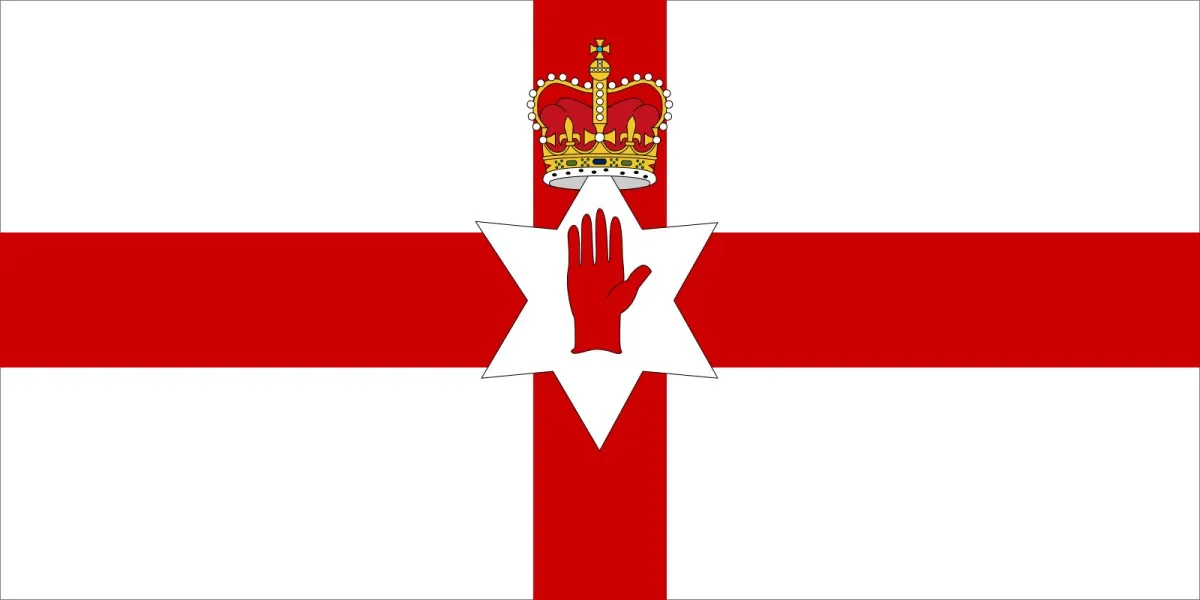 Photo: Northern Ireland, via cdn.britannica.com
The pharmaceutical sector provides a perfect example. Rather than create separate regulatory regimes for GB and NI, the MHRA has chosen to maintain alignment with European Medicines Agency standards across the whole UK. The result is that European drug regulations continue to apply in Birmingham and Bristol, despite voters in those cities having no say in how those rules are made.
The Establishment's Comfort Zone
This regulatory drift isn't happening by accident — it's the path of least resistance for a political and administrative class that never really believed in Brexit. Senior civil servants spent decades working within EU frameworks and naturally gravitate towards familiar solutions. Ministers, facing complex technical decisions, rely on advice from officials who see alignment as sensible and divergence as risky.
The result is a form of policy-making that privileges technocratic consensus over democratic choice. When every regulation that differs from EU standards must be justified as 'Brexit-compatible', the burden of proof falls on those who want to diverge rather than those who want to align. This isn't taking back control — it's handing control to unelected experts who know what's best for us.
The Democratic Deficit
The tragedy is that many of these aligned regulations might well command democratic support if properly debated. Environmental protection, workers' rights, and consumer standards are legitimate areas for government action. But when they're adopted through bureaucratic convergence rather than parliamentary choice, they lack democratic legitimacy and public understanding.
Brexit was never just about regulations — it was about democracy. The promise was that British voters would have the final say over the laws that govern them. Every regulation adopted through alignment rather than choice breaks that promise and reinforces the narrative that ordinary voters can't be trusted with complex decisions.
Fighting the Long War
Brexit was never a single moment but the beginning of a decades-long struggle between democratic sovereignty and technocratic convergence. The forces pushing for alignment — from multinational corporations seeking regulatory simplicity to civil servants preferring familiar frameworks — are powerful and persistent.
The only antidote is constant vigilance and democratic accountability. Parliament must scrutinise every regulation that happens to align with EU standards. Ministers must be forced to justify convergence rather than divergence. And voters must understand that Brexit isn't something that happened in 2020 — it's something that must be defended every day.
The Trade and Cooperation Agreement may have ended Britain's formal membership of the EU, but it left the door open for informal reintegration through the back door — and that door is being quietly opened wider every day.