
When Sadiq Khan swept to power as London Mayor in 2016, he promised to be "the most pro-business mayor London has ever had" whilst simultaneously delivering a "fairer, more equal city for all." Eight years later, as Khan prepares for what many expect to be his final term, London stands as perhaps the most damning indictment of progressive urban governance in the Western world.
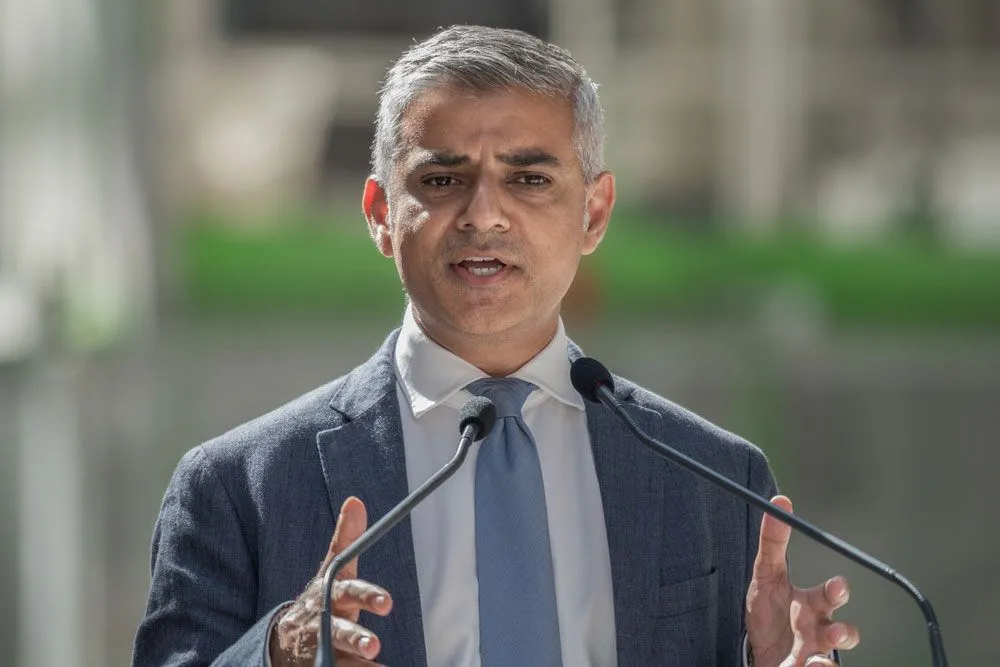 Photo: Sadiq Khan, via cdn.britannica.com
The statistics tell a story that no amount of media spin can disguise. Under Khan's stewardship, London has witnessed a 61% increase in knife crime since 2016, with youth violence reaching levels that would have been unthinkable under his predecessor Boris Johnson. The Metropolitan Police recorded over 15,000 knife offences in 2023 alone — a figure that represents not just numbers on a spreadsheet, but shattered lives and communities living in fear.
The Transport Tax Trap
Perhaps nowhere is Khan's progressive governance more visible than in his assault on London's motorists. The expansion of the Ultra Low Emission Zone (ULEZ) to outer London boroughs represents the kind of regressive taxation that hits working families hardest whilst allowing wealthy Londoners to virtue signal about air quality from their electric vehicles.
The numbers are stark: ULEZ generates approximately £300 million annually, yet Transport for London's own impact assessments show marginal improvements in air quality that were already trending downward before the scheme's implementation. Meanwhile, white van drivers, tradesmen, and shift workers — the backbone of London's economy — face daily charges of £12.50 simply for going to work.
Compare this to cities like Singapore or Stockholm, where congestion charging schemes were implemented with genuine public transport alternatives and transparent cost-benefit analyses. Khan's ULEZ expansion, by contrast, was rushed through despite overwhelming opposition from affected boroughs, many of which are Labour-controlled.
The Housing Hypocrisy
On housing — supposedly Khan's signature issue — the record is equally damning. Despite promises to deliver 116,000 affordable homes by 2022, Khan's administration managed just 57,000 by that deadline. More tellingly, the definition of "affordable" has been stretched beyond recognition, with shared ownership schemes requiring household incomes of £70,000 or more.
Meanwhile, average house prices in London have increased by 23% during Khan's tenure, far outpacing wage growth. For a mayor who built his political brand on representing ordinary Londoners, this represents a fundamental betrayal of his core constituency.
The contrast with other global cities is instructive. Tokyo, despite similar population pressures, has maintained relative housing affordability through consistent supply increases and streamlined planning processes. London, under Khan's watch, has doubled down on the same planning restrictions and developer taxes that created the crisis in the first place.
The Business Exodus
Khan's anti-business policies have predictably driven investment away from London. The City of London Corporation's own data shows a 40% decline in new business registrations since 2019, whilst established firms increasingly look to Dubai, Singapore, and even post-Brexit opportunities in other UK cities.
The mayor's response? More regulation, higher taxes, and lectures about corporate social responsibility. Khan's introduction of the "London Living Wage" and expansion of employment regulations has made London one of the most expensive places to do business in Europe, whilst his constant political grandstanding has created an atmosphere of regulatory uncertainty that investors despise.
Crime and Consequences
Perhaps most damaging of all is Khan's record on public safety. Despite inheriting a city where crime was falling, Khan has presided over increases in virtually every category of serious offence. Murder rates have fluctuated but remain stubbornly high, whilst theft, robbery, and sexual offences have all increased significantly.
Khan's response has been textbook progressive deflection: blame central government funding cuts, demand more money for "community programmes," and focus on hate crime statistics that conveniently ignore the lived reality of most Londoners. Meanwhile, stop-and-search — one of the few proven deterrents to knife crime — has been effectively neutered under pressure from activist groups.
The human cost is measured not just in crime statistics but in changed behaviour. Londoners increasingly avoid certain areas after dark, parents worry about their children's journeys to school, and businesses factor security costs into their operational planning. This is not the "world-class city" Khan promised to deliver.
The Progressive Paradox
Khan's tenure illustrates a fundamental contradiction at the heart of progressive urban governance: the gap between stated intentions and measurable outcomes. Every policy failure is met with demands for more of the same — more spending, more regulation, more bureaucracy — whilst the underlying problems metastasise.
This is governance by gesture, where the appearance of caring matters more than actual results. Khan's Twitter feed is full of statements on global issues over which he has no control, whilst basic mayoral responsibilities like transport, housing, and public safety deteriorate on his watch.
Cities like New York under Rudy Giuliani or even Birmingham under Conservative leadership have demonstrated that urban problems are solvable when mayors focus on competent administration rather than ideological posturing. Khan has chosen a different path.
The Reckoning
As Khan's time in office draws toward its likely conclusion, London faces a choice. It can continue down the path of progressive governance, accepting declining standards as the price of ideological purity. Or it can demand mayors who prioritise results over rhetoric, competence over virtue signalling.
The Khan years will be remembered as a cautionary tale about what happens when identity politics meets the hard realities of urban governance. London deserves better than a mayor who treats City Hall as a stepping stone to national politics whilst the city he was elected to serve becomes less safe, less affordable, and less prosperous with each passing year.
Sadiq Khan's legacy is a London that works for activists and bureaucrats, but fails the ordinary families who call it home.