Taxed by Stealth: Frozen Thresholds Are Doing the Work No Chancellor Will Admit To
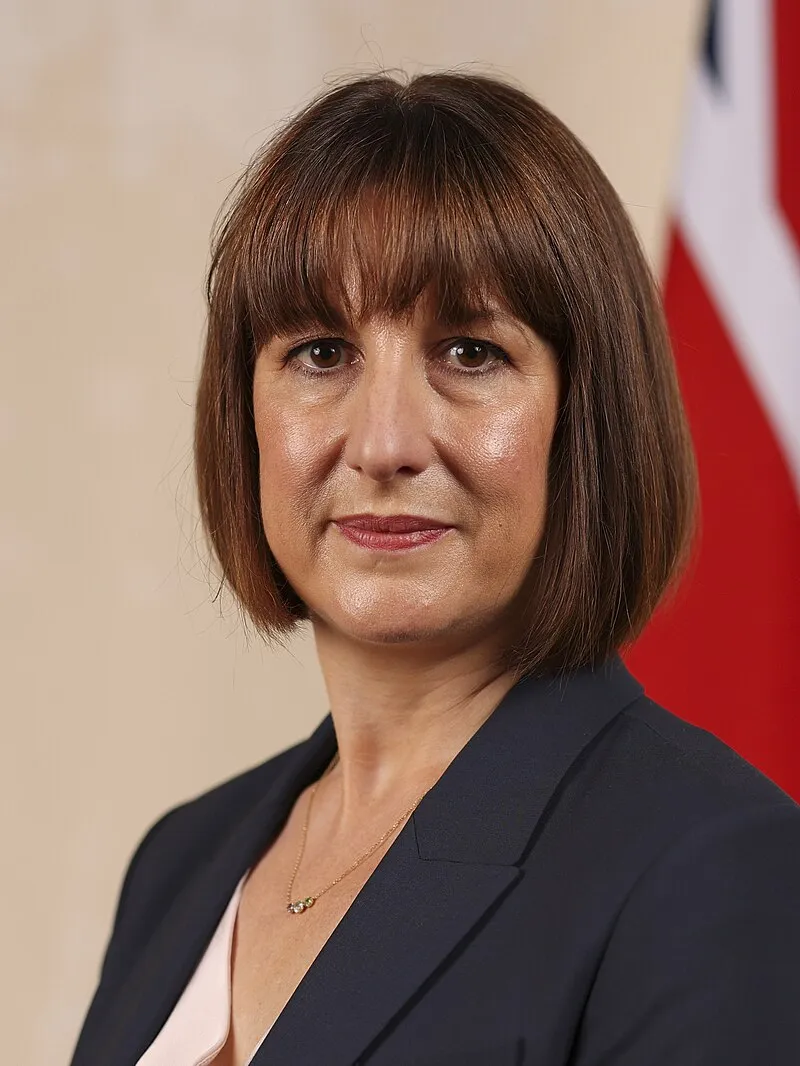
Photo of Rachel Reeves, via Wikimedia Commons
Ask a minister whether income tax has gone up and you will get a straight answer, delivered with a straight face: the rates are unchanged. Basic rate, higher rate, additional rate — all exactly where they were. The pledge to protect working people has been honoured, we are told, because the number in the box has not moved.
The number in the box is not the only number that matters. The threshold is the other one, and it has been pinned to the floor.
The freeze on income tax thresholds was introduced by Rishi Sunak as Chancellor and extended twice since — most recently in the October 2024 Budget, which pushed it out to April 2028. National Insurance thresholds were frozen alongside. The inheritance tax nil-rate band, set at £325,000, has been held down for so long that it now sits in the middle of the housing market rather than at the top of it. The VAT registration threshold, the savings allowances, the taper on the personal allowance, the high-income child benefit charge: the same technique, applied across the system.
The mechanics of a tax rise nobody votes for
Fiscal drag is not a conspiracy theory; it is arithmetic, and the Office for Budget Responsibility has been perfectly open about it. If a threshold is fixed in cash while average earnings grow, then each year a slice of previously untaxed income becomes taxable, and a slice of previously basic-rate income becomes higher-rate income. Nobody's rate changes. Everybody's bill does.
The OBR has consistently treated the freeze as one of the largest revenue-raising measures in the forecast — worth billions a year by the end of the period, and growing. That is the point of the design. A pound raised by fiscal drag attracts none of the political cost of a pound raised by announcing a new rate, because there is no announcement. It arrives in the payslip, quietly, in April.
The distributional consequence is worth stating plainly. More than a million additional people are projected to be pulled into the higher rate over the forecast period, alongside a larger cohort dragged into tax altogether. These are not the rich, whatever the rhetoric suggests. They are senior nurses, teachers on the upper pay scale, experienced tradesmen, middle managers, small business owners who pay themselves a modest salary and take the rest as dividends. They are the people the tax system is supposed to reward for getting on.
And the worst of it sits in the £100,000 to £125,140 band, where the withdrawal of the personal allowance produces an effective marginal rate of 60 per cent. Frozen thresholds have steadily expanded the population exposed to that rate. There is no serious economic argument for a 60 per cent marginal rate on earnings in the low six figures. It exists because it is invisible.
Consent is not a technicality
The constitutional point is older than any of this. The principle that taxation requires consent — Article 4 of the Bill of Rights, the whole architecture of Supply — is not a procedural decoration. It rests on visibility. A tax the payer cannot see is a tax the payer cannot consent to, and a government that raises revenue by indexation failure has found a way to be taxed without being asked.
Conservatives should be uncompromising about this, because it is the conservative argument. Fiscal responsibility is not merely about the total; it is about the honesty of the mechanism. A Chancellor who wants more revenue should say so, name the figure, take the argument to the country and accept the verdict. A Chancellor who wants more revenue and prefers not to have the argument is doing something different, and it is not clever accounting.
The best case for the freeze — and its limit
The strongest defence of fiscal drag is that it is the least economically damaging way to raise money. Raising headline rates distorts behaviour at the margin, encourages avoidance, and hits the wrong people. Freezing thresholds, on this account, spreads the burden, raises revenue predictably, and avoids the kind of behavioural response that makes a rate rise self-defeating. Some economists will add that as fiscal events go, it is progressive in effect, because the freeze bites hardest on those whose earnings grow fastest.
There is something in the first part of that argument. There is very little in the second. A measure whose revenue comes overwhelmingly from dragging ordinary earners into higher bands is not progressive in any meaningful sense, and the claim dissolves entirely when you notice what it does to aspiration. A nurse who takes on extra shifts and finds the marginal pound taxed at 42 per cent, then loses child benefit on top, is not being asked to contribute progressively. She is being told that effort does not pay.
And the honest alternative to fiscal drag is not the status quo ante. It is spending restraint. The British state is not underfunded in aggregate; it is inefficiently funded, and no government serious about growth would rather extract more from a senior teacher than reform the quangocracy that consumes the money she sends.
What it means for the political landscape
The Conservative Party has an opening here that requires no new policy and no fiscal risk: simply explain the mechanism, loudly, every time a minister claims to have protected working people. Publish the marginal rate tables. Name the number of people dragged into higher bands. Put a figure on the average family's stealth bill and let the Chancellor deny it on the record.
Voters are not stupid. They know their pay rise did not feel like a pay rise. What they lack is a party willing to tell them why.
A tax rise by indexation is still a tax rise — and a government that will not say the number out loud has already told you what it thinks of your consent.