
Every Conservative prime minister since Margaret Thatcher has faced the same crushing realisation: winning an election is only the beginning of the battle. The real fight begins when they try to implement the agenda that got them elected, only to discover that the machinery of government has other ideas. From immigration targets that mysteriously never materialise to welfare reforms that get watered down beyond recognition, the pattern is always the same — the blob strikes back.
 Photo: Margaret Thatcher, via content.api.news
The 'blob,' as former Education Secretary Michael Gove memorably dubbed it, isn't a conspiracy theory. It's a documented reality: the network of senior civil servants, quango chiefs, NGO leaders, and progressive institutional culture that collectively ensures that radical change gets filtered through a system designed to produce incremental adjustment. It's why Rishi Sunak's government ended up looking remarkably similar to Tony Blair's, despite thirteen years of supposedly Conservative rule.
 Photo: Michael Gove, via static.wikia.nocookie.net
The Institutional Resistance Machine
Consider the evidence. In 2010, David Cameron promised to reduce net migration to the "tens of thousands." By 2022, it had hit 745,000 — the highest figure in British history. Was this because Conservative politicians secretly wanted mass immigration? Or because the Home Office, the Treasury, the CBI, and a dozen other institutional voices consistently argued that every proposed restriction would damage the economy, breach human rights obligations, or prove administratively impossible?
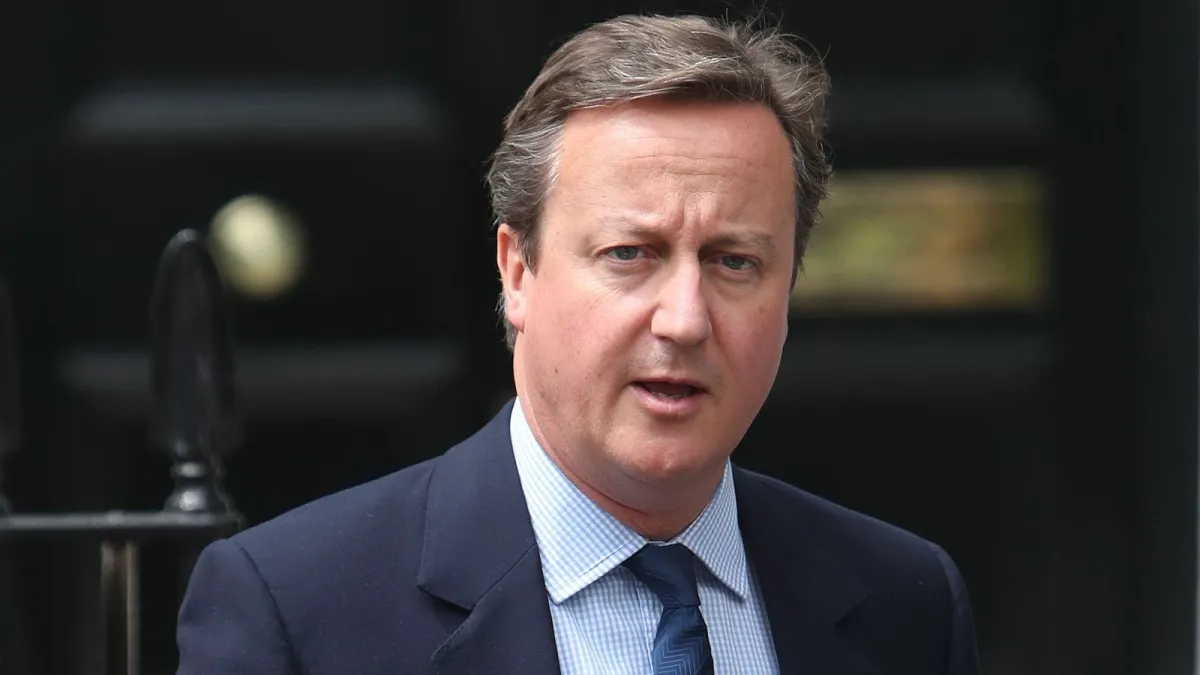 Photo: David Cameron, via e3.365dm.com
The same pattern emerges across every policy area. Iain Duncan Smith's Universal Credit was designed to make work pay and simplify the benefits system. After years of civil service "implementation," it became a Byzantine nightmare that costs more than the system it replaced. George Osborne's austerity programme was systematically undermined by departments that found creative ways to maintain spending whilst appearing to cut it. Even Boris Johnson's "oven-ready" Brexit deal was negotiated by civil servants who had opposed leaving the EU from day one.
This isn't incompetence — it's institutional capture. The senior civil service, recruited overwhelmingly from universities where conservative ideas are treated as intellectual curiosities at best, brings its worldview to bear on every policy proposal. They don't need to actively sabotage Conservative policies; they simply apply their own assumptions about what constitutes "good governance" to everything that crosses their desks.
The Quango State Within the State
Beyond Whitehall lies an even more insidious problem: the quango network. Britain now has over 400 arm's-length bodies spending more than £200 billion of taxpayers' money annually. From Ofcom to the Equality and Human Rights Commission, these organisations are staffed by the same progressive professional class that dominates the universities, the BBC, and the major charities. They operate with statutory powers but without democratic accountability, creating a shadow constitution that can veto elected governments.
Take the recent controversy over the Online Safety Act. Ofcom, the broadcasting regulator, has been given sweeping powers to determine what constitutes "harmful" content online. The Conservative government that passed this legislation clearly intended it to target illegal material and protect children. But Ofcom's own guidance documents suggest a far broader interpretation that could encompass mainstream conservative opinion on everything from immigration to transgender issues. The blob doesn't need to change the law — it just needs to interpret it.
The NGO Revolving Door
Perhaps most corrosive of all is the revolving door between government and the NGO sector. Senior civil servants routinely move to well-paid positions in organisations like Stonewall, Hope Not Hate, or the Joseph Rowntree Foundation — organisations that then lobby the government departments where their former colleagues still work. The result is a policy-making ecosystem where progressive pressure groups have privileged access whilst conservative voices are systematically excluded.
This explains why policies that poll well with the public — like stopping the boats or reducing immigration — prove so difficult to implement. The institutional network that shapes policy formation is ideologically committed to the opposite outcomes. They don't need to mount a coup; they just need to ensure that every conservative policy gets filtered through a system designed to produce liberal results.
Learning from the Left's Playbook
The left understood this decades ago. Antonio Gramsci's concept of cultural hegemony — the idea that lasting political change requires capturing the institutions that shape public opinion — has been the progressive movement's guiding strategy since the 1960s. They didn't just want to win elections; they wanted to make conservative governance impossible by ensuring that every lever of state power was operated by people who shared their worldview.
Conservatives, by contrast, have focused obsessively on electoral politics whilst ignoring the institutional dimension entirely. They've assumed that winning a majority in Parliament automatically translates into control of government policy. The last fourteen years have demonstrated the naivety of that assumption.
The Reform Imperative
Breaking the blob's stranglehold requires more than good intentions — it demands structural reform. This means abolishing unnecessary quangos, introducing genuine political appointees throughout the senior civil service, and creating alternative institutional networks that can challenge progressive orthodoxy. It means recognising that personnel is policy, and that conservative governance requires conservative personnel.
The alternative is more of the same: Conservative politicians making promises they cannot keep because they lack the institutional machinery to keep them. The blob has learned to be patient. It knows that electoral cycles come and go, but institutional capture is forever.
Until conservatives learn the same lesson, they'll keep winning elections and losing the war for Britain's future.