Channel 4's Free Ride: The Publicly Owned Broadcaster That Answers to Nobody and Skews Everything

The Privatisation That Never Happened
In 2022, the then Culture Secretary Nadine Dorries announced that Channel 4 would be privatised — sold into private ownership to free it from what the government characterised as the constraints of its public remit and to inject genuine commercial discipline into its operations. The proposal attracted predictable fury from the media establishment, the creative industries lobby, and the broadcaster's own staff. By 2023, the government had quietly dropped it.
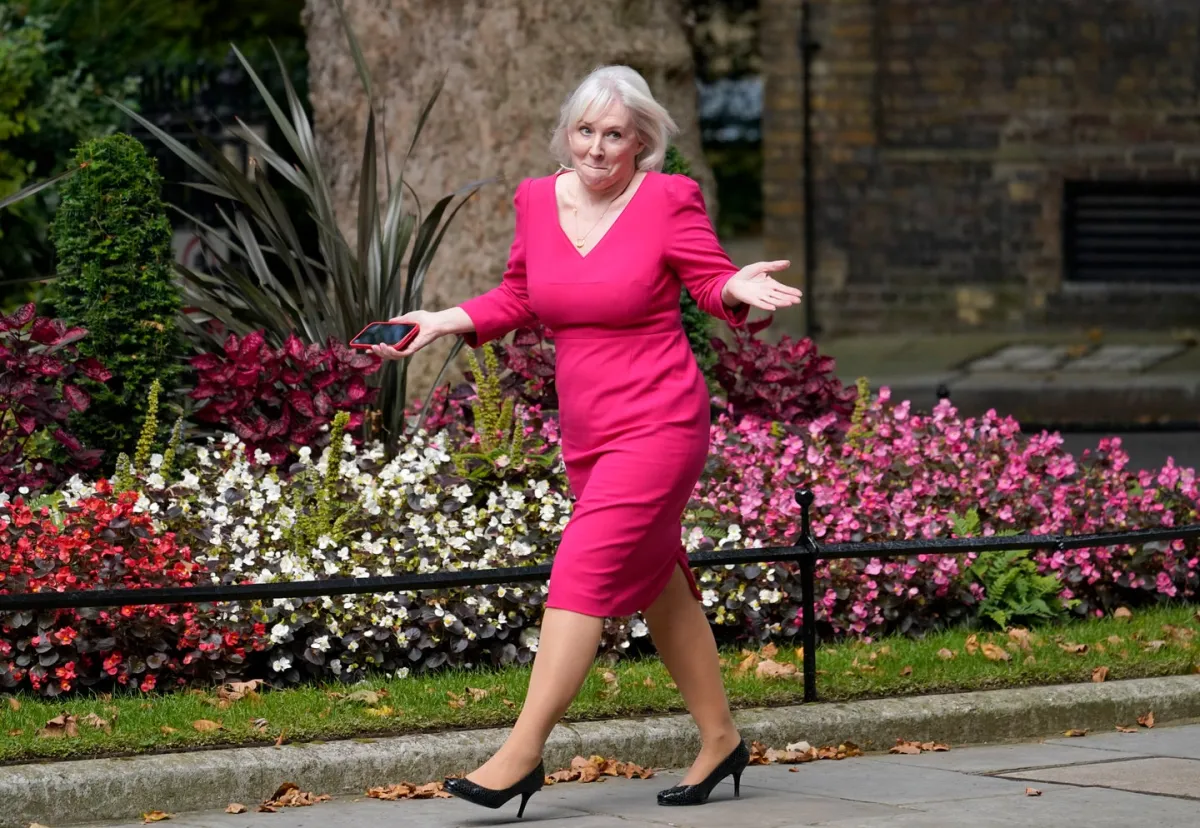 Photo: Nadine Dorries, via img.huffingtonpost.com
The reversal was presented as a pragmatic reassessment. The sale process had not attracted the level of interest originally anticipated. The timing was awkward. There were concerns about the impact on independent production companies. These were the official explanations. The less flattering interpretation — and the more accurate one — is that the Conservative government simply lacked the institutional nerve to see through a reform that every progressive voice in British public life had declared unconscionable.
Channel 4 is now operating under a Labour administration that regards the broadcaster with something approaching affection, and the privatisation question has been shelved indefinitely. The free ride continues.
What Channel 4 Actually Is
It is worth being precise about Channel 4's constitutional position, because the broadcaster benefits enormously from public confusion on this point. Channel 4 is not the BBC. It receives no licence fee. It is funded by advertising revenue and operates commercially. But it is owned by the state — a corporation established by statute, with a board ultimately accountable to ministers, and a public service remit enshrined in legislation.
This is a peculiar hybrid. It gives Channel 4 the commercial freedom to pursue ratings and revenue, while providing it with the reputational shield of public ownership and public purpose. When critics challenge its editorial culture, the broadcaster retreats behind its statutory remit. When critics challenge its commercial behaviour, it points to its public ownership as evidence of its higher purpose. It is a remarkably convenient arrangement — for Channel 4.
The broadcaster's public remit, as defined in the Communications Act 2003, includes obligations to demonstrate innovation, appeal to culturally diverse communities, and exhibit a distinctive character. In practice, this remit has been interpreted to mean programming that is relentlessly progressive in its cultural assumptions, adversarial toward conservative values, and largely uninterested in the perspectives of the half of the country that does not share the worldview of a metropolitan media professional.
The Editorial Culture Problem
Chanel 4 News — produced by ITN and broadcast on the channel — is the most obvious flashpoint, but the problem runs deeper than a single news programme. The broadcaster's commissioning culture, its choice of documentaries, its satire, its entertainment programming — all of it reflects a consistent set of assumptions about what constitutes progress, who the villains of contemporary Britain are, and which voices deserve amplification.
This would be entirely unremarkable if Channel 4 were a private company answerable to its shareholders and its audience. Sky News has an editorial culture. GB News has an editorial culture. The difference is that those organisations are privately owned and operate without the implicit backing of state ownership. Channel 4's public status confers a legitimacy and permanence that a purely commercial broadcaster must earn continuously through audience trust.
The strongest counter-argument — and it deserves a serious hearing — is that Channel 4's remit specifically requires it to serve minority and underrepresented audiences, which inevitably means programming that does not reflect the mainstream. There is something to this. A broadcaster genuinely committed to diversity of voice should not simply mirror the median voter. The question is whether 'diversity' in Channel 4's editorial framework means diversity of genuine perspective, or diversity of identity within a narrow ideological bandwidth. The evidence of the past decade suggests emphatically the latter.
The Structural Problem with the Status Quo
Genuine media pluralism — the kind that a healthy democracy requires — is not achieved by having multiple outlets that share the same fundamental assumptions about politics, culture, and society. Britain's broadcast media landscape is dominated by institutions — the BBC, Channel 4, ITV's news operation — that recruit from the same universities, share the same professional networks, and operate within the same cultural comfort zone. The result is not balance. It is consensus masquerading as objectivity.
Privatisation would not, by itself, have solved this problem. A privately owned Channel 4 might well have retained its existing editorial culture, particularly if sold to a buyer sympathetic to it. But structural change — genuine exposure to market accountability, the removal of the state ownership shield, the introduction of real commercial consequence for audience alienation — would at minimum have altered the incentive structure. A broadcaster that must earn its survival through audience trust rather than statutory protection is a different animal from one that can afford to be indifferent to the half of its potential audience it consistently condescends to.
What Institutional Cowardice Looks Like
The failure to privatise Channel 4 is not primarily a story about one broadcaster. It is a story about a pattern of behaviour that has characterised the British centre-right's engagement with cultural institutions for thirty years. The pattern is this: identify a problem, announce a reform, encounter resistance from the establishment, and retreat.
The BBC licence fee was going to be reformed. It wasn't. Channel 4 was going to be privatised. It wasn't. The universities were going to be held accountable for their ideological monoculture. They haven't been. The arts funding bodies were going to be rebalanced. They weren't. Each individual retreat is explicable. The cumulative effect is a cultural landscape in which the institutions that shape public opinion remain structurally insulated from any conservative challenge, regardless of election results.
The lesson the left has drawn from this pattern — correctly — is that the right will complain loudly and act minimally. The lesson the right should draw is that complaint without consequence is not a strategy. It is a performance.
The Path Forward
A serious media reform agenda does not require Channel 4 to become a conservative broadcaster. It requires Channel 4 to become genuinely accountable — to its audience, to the market, and to the democratic principle that a publicly owned institution should not function as a platform for one side of the cultural debate. Whether that accountability is achieved through privatisation, through a reformed statutory remit, or through structural changes to its governance is a secondary question. The primary question is whether any future conservative government will have the resolution to ask it.
A broadcaster that is publicly owned but answers to no one, and editorially homogeneous but calls itself diverse, is not a public asset — it is a publicly funded liability to genuine democratic discourse.