The State Knows Best: Labour's Relentless Campaign to Govern Every Corner of Your Life

A Pattern, Not a Coincidence
Take any single one of them in isolation and the government will tell you it is a measured, evidence-based response to a specific public health challenge. Take them together, and a rather different picture emerges. The sugar tax. The ban on junk food advertising before the 9pm watershed. Restrictions on buy-one-get-one-free promotions on foods deemed unhealthy. Proposed minimum unit pricing for alcohol. The expansion of low-emission zones. Plain packaging mandates. Restrictions on the placement of confectionery near supermarket checkouts. Each measure, its architects will insist, is modest, targeted, and justified by the data.
But the cumulative effect — and, one suspects, the cumulative intent — is something rather more ambitious: a systematic narrowing of the space in which the British citizen is permitted to make their own choices, funded by their own money, in their own time. This is not the nanny state as a lazy tabloid caricature. It is the nanny state as a governing philosophy, pursued with patience, consistency, and a complete absence of ideological embarrassment.
The Sugar Tax That Wasn't Enough
The Soft Drinks Industry Levy, introduced in 2018 under Theresa May's government and enthusiastically maintained and extended under Labour, was sold as a market-based nudge — a way of encouraging manufacturers to reformulate products without dictating to consumers. The evidence on reformulation is genuinely mixed; some manufacturers did reduce sugar content, though often by substituting artificial sweeteners whose own health profile is contested. What the tax has unambiguously done is increase the cost of certain beverages for lower-income households, who are statistically more likely to purchase them.
This is a recurring feature of paternalist policy that its proponents are remarkably reluctant to acknowledge: the burdens fall disproportionately on the working class. The middle-class health enthusiast who already drinks sparkling water and organic juice is not inconvenienced by a levy on full-sugar cola. The family on a tight budget, for whom an affordable fizzy drink represents a small and uncomplicated pleasure, pays the price. Progressive in rhetoric; regressive in practice.
Advertising, Algorithms, and the Assumption of Incompetence
The junk food advertising restrictions that came into force in October 2025 extend a pre-watershed television ban to online platforms, prohibiting paid-for digital advertising of high-fat, salt, or sugar products. The policy rests on the assumption that adults, upon encountering an advertisement for a burger or a packet of crisps, are rendered incapable of rational decision-making. The same adults who are trusted to vote, drive, enter contracts, raise children, and manage their own finances are apparently unable to scroll past a sponsored post for a chocolate bar without being helplessly compelled to purchase it.
The strongest version of the public health argument is that advertising shapes preferences at a population level in ways that aggregate into significant health outcomes — and that children, in particular, are vulnerable to commercial messaging in ways that justify restriction. That is a legitimate point, and the case for limiting advertising specifically targeted at children has always been more defensible than the broader ban. But the current framework extends well beyond child protection into a general presumption that the public requires protection from commercial speech. That is a categorically different proposition, and one that should trouble anyone who values freedom of expression in its commercial as well as its political dimension.
ULEZ and the Politics of Mobility
The expansion of London's Ultra Low Emission Zone under Sadiq Khan — extended to the full capital in August 2023 and now serving as a template for similar schemes being considered in other major cities — illustrates the paternalist tendency at its most economically punishing. The charge, currently £12.50 per day for non-compliant vehicles, falls most heavily on those who cannot afford to replace their cars: the self-employed tradesperson, the carer driving between appointments, the rural commuter who has no viable public transport alternative.
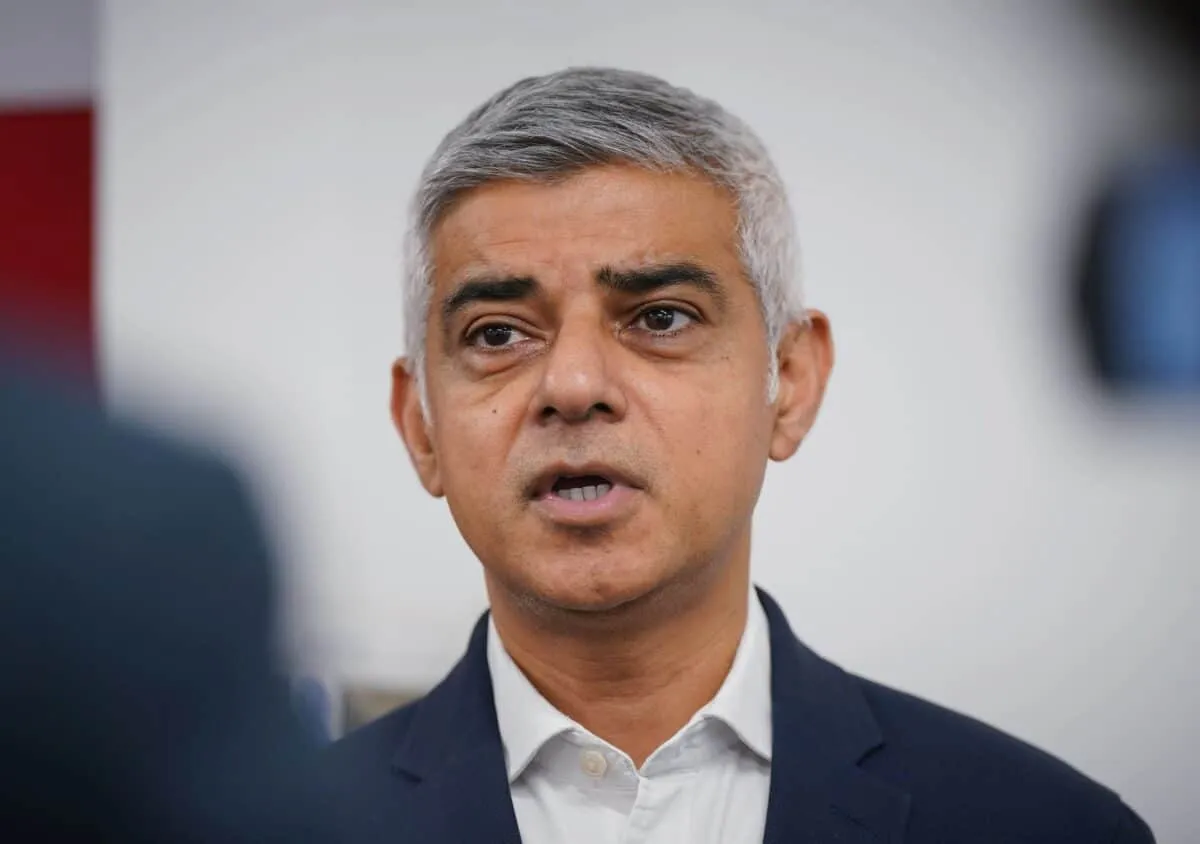 Photo: Sadiq Khan, via assets.thelondoneconomic.com
The environmental case for reducing vehicle emissions in dense urban areas is not without merit. The question is whether a blunt daily charge, with inadequate exemptions and a scrappage scheme widely criticised as underfunded, is the appropriate instrument — or whether it is, in practice, a mobility tax on the working poor dressed up in green rhetoric. When the policy's proponents are disproportionately those who live in Zone 1, use the Tube, and have never needed to own a car, the class dynamics are hard to ignore.
Minimum Unit Pricing: Scotland's Warning
Scotland introduced minimum unit pricing for alcohol in 2018, setting a floor of 50 pence per unit. The policy was heralded by public health advocates as a landmark intervention. Six years on, the evidence is considerably more equivocal than its champions predicted. A 2023 evaluation by Public Health Scotland found that while there had been some reduction in alcohol-related deaths, the effect was smaller than modelled, and the burden fell — once again — on lower-income drinkers who tend to purchase cheaper products. Premium brands, favoured by wealthier consumers, were largely unaffected.
Labour is now actively considering extending a version of this policy to England and Wales. The political calculation appears to be that the public health framing provides sufficient cover for what is, in economic terms, a price control — a mechanism that distorts markets, reduces consumer choice, and generates windfall gains for producers of mid-range products while doing relatively little about the consumption patterns of those who can easily absorb the additional cost.
The Ideology Behind the Interventions
What unites all of these measures is not evidence — the evidence base for each is, at best, contested — but ideology. Specifically, the ideology of therapeutic governance: the belief that the state's role is not merely to protect citizens from one another, but to protect them from themselves. It is an ideology with deep roots in a certain strand of progressive thought, one that views personal choice not as a right to be respected but as a risk to be managed.
Conservatives have a coherent and principled alternative: that the proper role of government is to provide accurate information, maintain genuine choice, and trust citizens to make decisions about their own lives. That is not indifference to public health. It is respect for the people government is supposed to serve.
The Voters Labour Is Losing
There is a political dimension here that Labour's strategists would be wise to consider. The voters who swung behind Brexit — and who remain the decisive demographic in the Red Wall seats that determine British general elections — are not natural enthusiasts for state paternalism. They tend to be older, more likely to own a car, more likely to drink alcohol, and more likely to regard lectures from metropolitan public health professionals as a form of condescension. Every ULEZ expansion, every advertising ban, every minimum unit pricing announcement is a reminder to those voters that the people running the country do not much trust or respect them.
The nanny state does not merely restrict freedom — it signals contempt, and in politics, contempt has a habit of being returned.