State Ownership Always Fails: Labour's Nationalisation Fantasy Is Built on a History It Would Rather Forget

The Comfort Blanket That Never Kept Anyone Warm
Labour has never truly made peace with privatisation. Even after three decades of evidence, the party's instinct — whenever public services frustrate voters — is to reach for the same blunt instrument: state ownership. With ministers signalling renewed appetite for nationalising water companies, energy networks, and eventually rail, the question is no longer whether Labour believes in public ownership. The question is whether the British public has forgotten why we moved away from it in the first place.
The answer, if the polling is any guide, is that many have. Surveys consistently show majority support for renationalising water and rail in particular. It is a politically understandable position. Bills are high, trains are late, and the water companies have paid dividends while discharging sewage. The anger is legitimate. But the solution being offered is a political comfort blanket masquerading as economic policy — and the historical record should give every taxpayer serious pause.
What State Ownership Actually Looked Like
British Rail is the case study that proponents of nationalisation prefer not to discuss in detail. At its operational peak in the 1970s, it was haemorrhaging public money at a rate that would make today's subsidy figures look modest. By 1982, the government subsidy to British Rail had reached approximately £900 million per year in nominal terms — a figure representing a colossal ongoing drain on the public finances. Productivity was poor, industrial disputes were endemic, and the network was caught in a cycle of underinvestment that no amount of Treasury top-ups could break. The unions held effective veto power over operational decisions, meaning that modernisation was perpetually deferred in favour of preserving working practices that served employees rather than passengers.
British Steel tells a similarly uncomfortable story. Nationalised in 1967, it lurched from crisis to crisis throughout the 1970s, accumulating losses and requiring repeated government bailouts. By the time of the 1980 steel strike, the corporation was losing roughly £1.8 million per day. The workforce was bloated, investment decisions were driven by political considerations — keeping marginal constituencies employed — rather than commercial logic, and the steel produced was increasingly uncompetitive on world markets. It took the painful restructuring of the early Thatcher years, followed by privatisation in 1988, to place the industry on a sustainable footing.
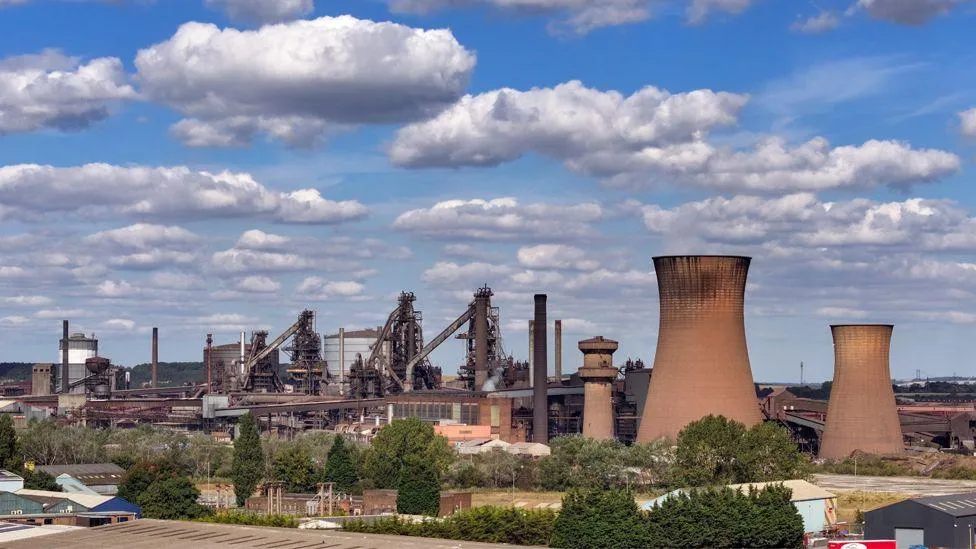 Photo: British Steel, via ichef.bbci.co.uk
The pre-Thatcher energy sector was no different. The nationalised electricity and gas industries were characterised by rigid demarcation lines, resistance to new technology, and a culture in which the interests of the workforce consistently trumped the interests of the consumer. When the 1973 oil crisis struck, the structural vulnerabilities of state-run energy were brutally exposed.
The Privatisation Dividend Nobody Wants to Acknowledge
The standard left-wing account of privatisation is that it transferred public assets into private hands at knockdown prices, enriched shareholders, and delivered no tangible benefit to ordinary people. This account is politically convenient but empirically thin.
Consider telecommunications. British Telecom, prior to privatisation, operated a waiting list for telephone connections measured in months. Post-privatisation, the sector was transformed by competition and investment into one of the most dynamic in the world. British Airways went from a loss-making state carrier propped up by taxpayers to a globally competitive airline. The productivity improvements across privatised industries in the decade following the Thatcher reforms were well-documented by economists across the political spectrum, including those with no ideological sympathy for the Conservative Party.
None of this means privatisation was executed perfectly. Some sectors — water in particular — were structured in ways that allowed excessive dividend extraction without adequate regulatory teeth. That is a regulatory failure, not a market failure, and it demands a regulatory solution, not renationalisation.
The Strongest Case for the Other Side — and Why It Doesn't Hold
The most intellectually serious argument for public ownership is not nostalgia — it is the natural monopoly argument. Water infrastructure, electricity networks, and rail track are not competitive markets. You cannot have three sets of water pipes running to every home. Where genuine natural monopolies exist, the argument goes, public ownership may be preferable to regulated private monopoly because it removes the profit motive from an essential service.
This is a serious argument. It deserves a serious answer. The answer is that public ownership does not eliminate the distortions of monopoly — it replaces shareholder capture with union capture and political capture. The incentive problems do not disappear under state ownership; they mutate. Investment decisions get made for electoral reasons. Pricing decisions get made for headline reasons. And when things go wrong, accountability is diffuse — nobody is ever clearly responsible, and the taxpayer absorbs the loss.
The better answer to natural monopoly is not nationalisation. It is robust, independent, properly resourced regulation with genuine enforcement powers and meaningful penalties. Ofwat's failure is not an argument for public ownership of water; it is an argument for a regulator that actually regulates.
What Labour Is Really Selling
When Keir Starmer's government signals openness to expanded state ownership, it is not responding to evidence. It is responding to sentiment. The political calculation is straightforward: voters are frustrated, state ownership polls well, and the fiscal costs of renationalisation can be deferred or obscured. What cannot be obscured, eventually, is the operational reality.
The countries that have maintained extensive state ownership of key industries — France being the most commonly cited European example — have done so with significant ongoing fiscal costs, and their records on service quality and innovation are mixed at best. The Scandinavian countries so beloved of the British left have, in most cases, pursued liberalisation and market mechanisms in sectors where the UK left would demand nationalisation.
Labour is not offering Britain a Scandinavian future. It is offering a 1970s past dressed in modern language. The nationalisation of failing industries was tried. It produced failing nationalised industries. The electorate deserves to be told that plainly.
The Verdict
Nationalisation is not a policy — it is a political emotion, and Britain has already paid the price of indulging it once.