Westminster for Sale: How Foreign Governments Are Quietly Buying British Policy
The Lobbying Nobody Wants to Talk About
In January 2025, the Foreign Influence Registration Scheme (FIRS) — the government's flagship response to concerns about covert foreign interference in British politics — completed its first full year of operation. The verdict from transparency campaigners, security analysts, and even some within Whitehall itself is damning: the scheme is a bureaucratic fig leaf, not a functioning safeguard. Foreign states and their well-funded proxies continue to operate inside the Palace of Westminster with a freedom that would be unthinkable in Washington, Canberra, or Ottawa.
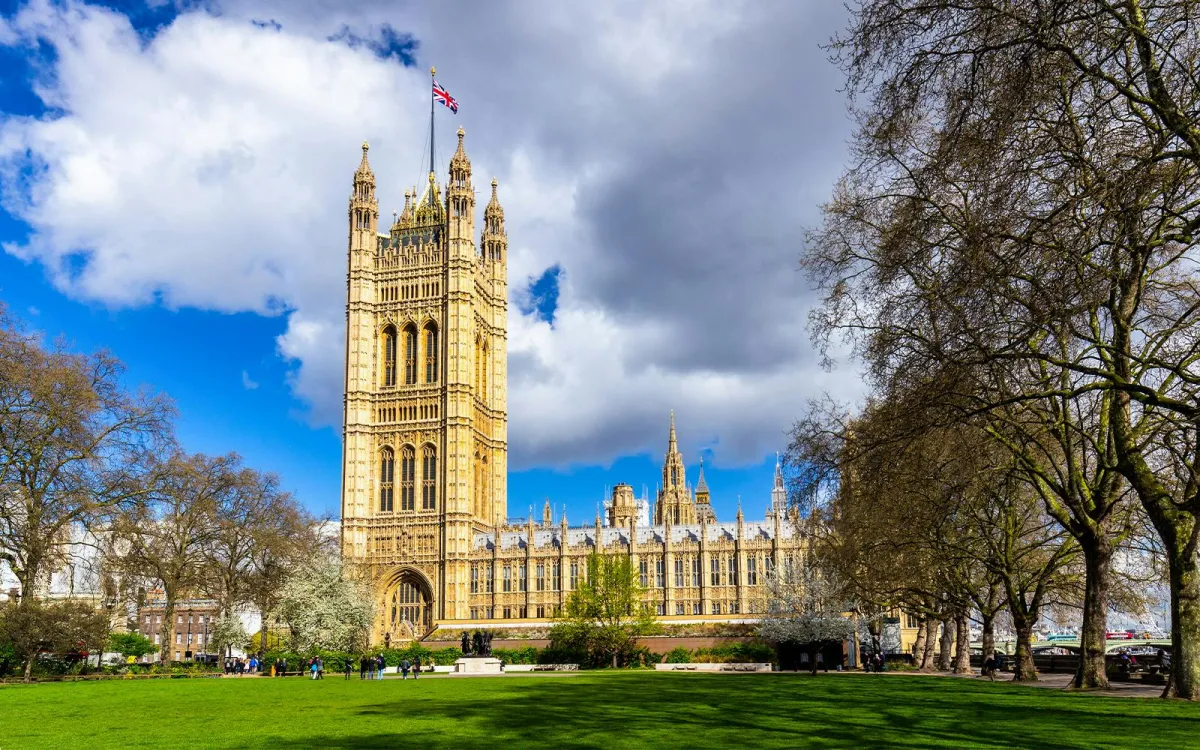 Photo: Palace of Westminster, via cdn-imgix.headout.com
This is not a fringe concern. The Intelligence and Security Committee's 2020 Russia report — suppressed until after the general election of that year, in circumstances that remain a stain on the Johnson government — warned explicitly that successive administrations had failed to investigate or respond to the threat of foreign interference in British democratic institutions. Five years on, the structural vulnerabilities it identified remain largely unaddressed.
What FIRS Actually Does — and Doesn't Do
FIRS, introduced under the National Security Act 2023 and operationalised in 2024, requires individuals and entities carrying out certain political influence activities on behalf of foreign governments to register with the Home Office. In principle, that sounds reasonable. In practice, the scheme is riddled with exemptions, thresholds, and definitional ambiguities that make it trivially easy to avoid.
The scheme does not, for instance, require think tanks to disclose foreign government funding unless they are formally contracted to carry out influence activities — a distinction that any competent intermediary can engineer around. All-party parliamentary groups (APPGs), those informal but often influential cross-party bodies that shape the policy conversation on everything from trade relationships to human rights, remain almost entirely unregulated in terms of their funding sources. A foreign embassy can sponsor an APPG secretariat, fund its research, host its events, and fly its members to conferences abroad — and none of that need appear on any publicly searchable register in a form that connects the dots.
Compare this to the United States' Foreign Agents Registration Act (FARA), which has been in force since 1938 and requires detailed, publicly accessible disclosure of any person or organisation acting in a political or quasi-political capacity on behalf of a foreign principal. FARA filings are granular: they include financial records, meeting logs, and descriptions of specific activities. The penalties for non-compliance are criminal, not merely administrative. Britain's equivalent is, by any serious measure, a weaker instrument — and that weakness is not accidental.
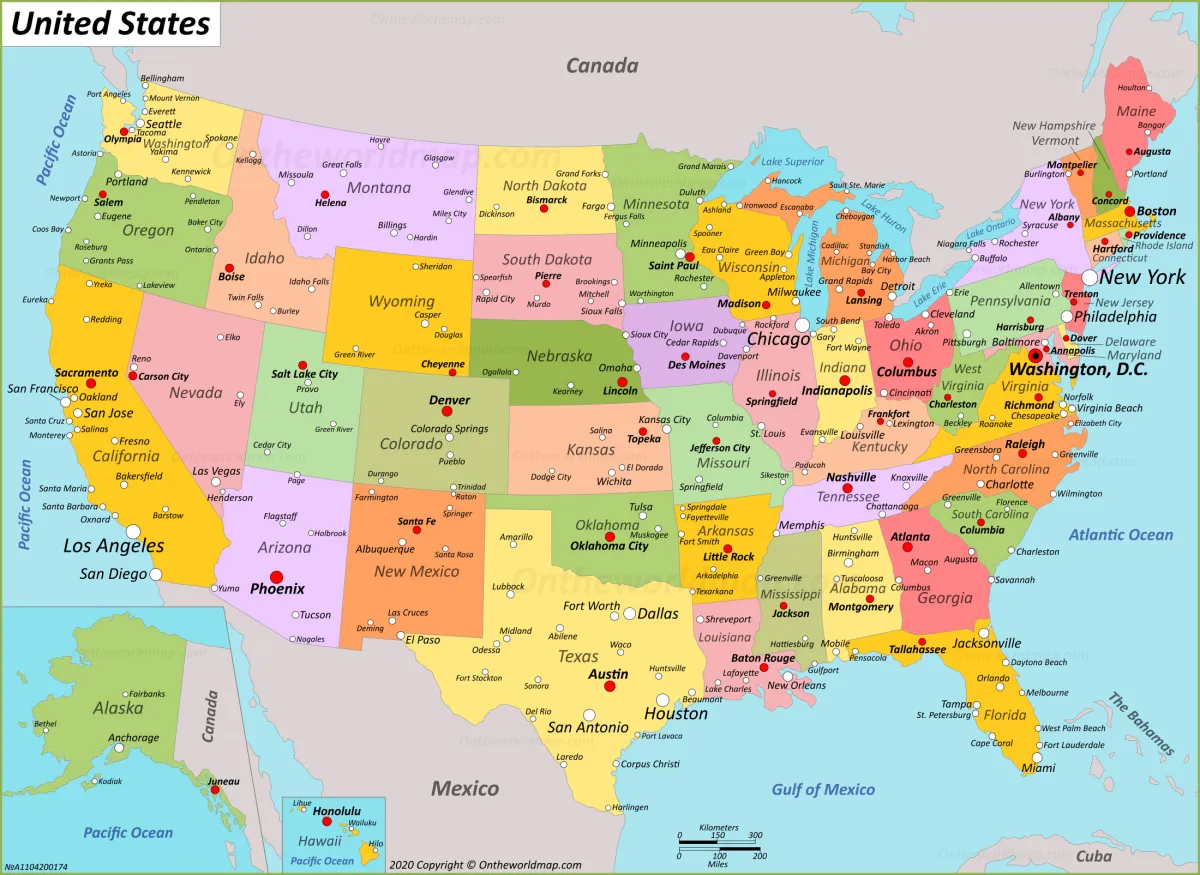 Photo: United States, via ontheworldmap.com
The Think Tank Problem
Perhaps nowhere is the vulnerability more acute than in the world of British policy think tanks. London hosts one of the densest concentrations of policy research organisations in the democratic world, and many of them wield genuine influence: briefing ministers, placing op-eds in national newspapers, submitting evidence to select committees, and providing the intellectual scaffolding for manifesto commitments.
Several of these organisations receive funding from foreign governments or state-adjacent foundations, a fact that is sometimes disclosed in annual reports and sometimes not. The disclosure that does exist is typically voluntary, inconsistent in format, and buried in documents that no busy journalist or parliamentary researcher is likely to cross-reference against policy outputs. The question of whether a think tank's position on, say, Gulf energy investment, China trade policy, or Turkish EU accession has been shaped by the nationality of its donors is one that the current framework makes almost impossible to answer.
This is not a matter of imputing bad faith to every researcher who has ever accepted a foreign grant. It is a matter of basic institutional hygiene. The public interest in knowing who is funding the ideas that shape government policy is self-evident — and yet the political class has consistently declined to impose the transparency standards that would satisfy it.
Sovereignty Means Nothing If the Cheque Book Gets a Vote
Conservatives, of all people, should understand the stakes here. The case for national sovereignty — the argument that animated the Brexit vote and continues to define the right's most principled instincts — rests on the proposition that democratic self-governance requires decisions to be made by, and accountable to, the people of this country. That principle is hollow if a foreign government can, through a combination of well-placed donations, sponsored research, and cultivated parliamentary relationships, quietly tilt the scales on a piece of legislation.
The strongest counter-argument is that Britain is an open society and a global hub, and that excessive restrictions on foreign engagement would damage legitimate academic, diplomatic, and commercial relationships. That is a serious point. But it conflates transparency with prohibition. Nobody is proposing that foreign governments be barred from engaging with British institutions. The argument is simply that when they do so in ways designed to influence policy, the British public should be able to see it. That is not isolationism; it is basic democratic accountability.
What a Real Regime Would Look Like
A genuinely effective foreign lobbying framework would extend mandatory registration to think tanks receiving foreign government funding above a defined threshold, regardless of whether a formal influence contract exists. It would require APPGs to disclose all external funding sources in a searchable, standardised format. It would give the scheme's enforcement body — currently the Home Office — investigative powers and criminal sanctions comparable to those available under FARA. And it would require disclosure of foreign-funded hospitality, travel, and events attended by MPs and peers.
None of this is radical. It is, in fact, the minimum standard that a country serious about protecting its democratic institutions would already have in place. The fact that Britain does not have it tells you something about the priorities of the political and financial establishment that benefits from the current opacity.
The Reckoning That Keeps Being Deferred
Labour came to power promising a new era of integrity in public life. The early signs are not encouraging. FIRS has not been strengthened; APPG reform remains stalled; and the broader question of foreign money in British politics has been quietly deprioritised in favour of more electorally convenient causes. The Conservatives, for their part, have little standing to complain — it was on their watch that the Russia report sat unread and the lobbying framework remained deliberately porous.
The reckoning will come eventually. A scandal sufficiently large and sufficiently well-documented will force the issue onto the front pages in a way that cannot be managed or delayed. The only question is whether Britain acts before that moment or after it.
Sovereignty purchased on credit from a foreign treasury is not sovereignty at all — and Westminster's tolerance for the status quo is a betrayal of every voter who thought they were taking back control.